
Digital Advertising
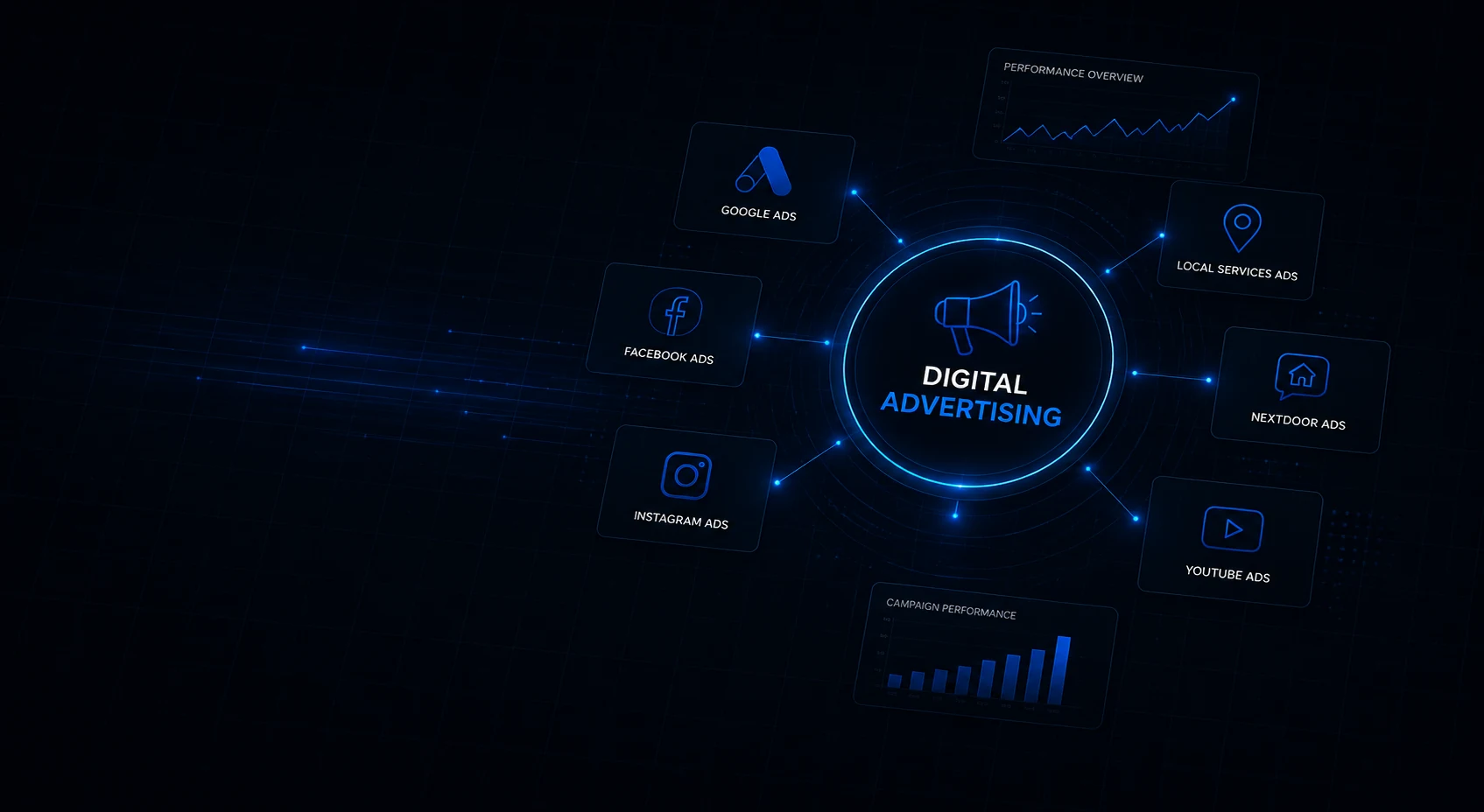
Clicks are not the point. We run Google Search, Local Services Ads, and Meta, then track what happens after the click through the booked job.
Why Most Local Ad Budgets Leak
Google Search, Local Services Ads, and Meta, managed against booked jobs instead of clicks.
Paying for the Wrong Clicks
Budget going to searches, towns, and tire-kickers that were never going to book anything.
No Line to Revenue
A dashboard full of impressions and no honest answer to which dollar produced which job.
Clicks Landing Nowhere
Good ads pointed at a slow page with a buried phone number and a form that goes to an inbox.
Leads With No Catcher
Ads running with no CRM behind them, so the lead you paid for gets one call and then nothing.
Who Paid Advertising Is Right For
Paid advertising is the fastest lever in local marketing and the easiest one to waste. It works when a few things are already true about your business, and it burns money when they are not. We would rather tell you that up front than take a budget we know is going to disappoint you.
This is a good fit if
- You have capacity right now. There is room on the schedule this week for the jobs ads would bring in, and someone to run them.
- Somebody answers. Calls get picked up during business hours, and missed calls get returned or texted back in minutes, not tomorrow morning.
- Your work has real urgency or real ticket size behind it. Emergency service, replacements, and higher-value jobs justify what a local click costs. Impulse-priced work usually does not.
- You can fund a consistent test window across a few months. Paid needs enough runway to get past the learning phase and produce reliable cost per booked job numbers.
- You are licensed, insured, and willing to pass background checks, which is the entry ticket for Local Services Ads in most trades.
This is probably not for you if
- You want the cheapest possible leads. We optimize for cost per booked job, and the cheapest leads are almost always the ones that never book.
- Nothing catches the lead. If calls roll to voicemail and form submissions sit in an inbox until evening, ads will just fund your competitors. Fix the follow-up first, then buy traffic.
- You want to run a small budget for one month and then decide. That is not enough time or data to learn anything, and we would rather turn the work down than take money for a test designed to fail.
What You Get
What You Actually Get
No mystery retainer and no dashboard you never open. Here is the specific work that runs on your account every month, and what it produces in your business.
Conversion Tracking Built Before Anything Spends
Google Ads conversion actions, GA4, call tracking on the phone number, and a Google click ID that follows the lead into your CRM. Before a single dollar runs, we can tell which ad produced which phone call.
Google Search Campaigns Structured by Job Type
Tight ad groups for each service that actually makes you money, responsive search ads written for that exact search, plus sitelinks, callouts, call assets, and ad scheduling. Emergency work, replacements, and maintenance get separate ads and separate budgets because they are separate buyers.
Local Services Ads Setup, Verification, and Lead Disputes
We walk your license, insurance, and background checks through Google's screening to earn the Google Guaranteed badge, then set job types, service area, and weekly budget. Once it is live, we review the lead log and dispute the junk so you stop paying for wrong numbers and spam.
Search Term Pruning and Negative Keyword Lists
We read the searches that actually triggered your ads and cut the ones that were never going to book: DIY questions, job seekers, parts shoppers, and towns you do not serve. This is the largest single source of wasted local ad spend, and the work is never finished.
Service Area Targeting Locked Down
Location targeting set to people physically in or regularly in your service area, not the default that also counts anyone who merely showed interest in it. City and zip level performance gets reviewed monthly so budget shifts toward the towns that book.
A Landing Page the Click Deserves
Traffic lands on a fast page that matches the search, with a tap-to-call number in reach of a thumb and one obvious next step. If your current page will not convert, we will say so and build the one that will.
Meta Campaigns Where They Earn Their Place
Pixel and Conversions API wired up properly, then retargeting and local awareness campaigns for the services nobody searches for at two in the morning. We recommend Meta when there is a specific job for it, not to fill out a channel checklist.
A Monthly Report That Says What the Money Bought
Cost per lead and cost per booked job broken out by channel, campaign, and service, next to what we changed and what we are changing next. Plus a call, because a PDF nobody opens is not reporting.
How a Paid Program Gets Built and Run
Job Math and Capacity Check
Before we touch an ad account, we work out what a booked job is worth to you and how many more you can take.
We need real numbers from your side: average job value by service, roughly what share of quoted work you close, and how many extra jobs a week you can actually staff. That math sets the ceiling on what a lead is allowed to cost and tells us which services deserve budget first. If the numbers say advertising is not the right first move for you, we will say so on that call instead of selling you a campaign.
Tracking Before Traffic
Measurement gets built and tested first, so no budget spends into a black hole.
We set up conversion actions in Google Ads, connect GA4, put call tracking on the phone number, and make sure the Google click ID gets stored on the lead record in your CRM. Then we place a test call and submit a test form and follow both all the way through to confirm they land where they should. This step is the reason we can later tell you which campaign produced a job instead of guessing at it.
Verification, Build, and Launch
Local Services Ads screening starts first because Google controls that clock, and Search goes live alongside it.
You supply the license, the insurance certificate, and consent for background checks on the owner and anyone entering homes. Google's screening can run a couple of weeks, so we start it immediately and build the Search campaigns while it processes. Ad groups, ad copy, extensions, schedules, geo targeting, and the landing page all go up together so the first click has somewhere good to land.
The Waste Hunt
The first several weeks are mostly about removing what does not work.
New campaigns always buy some garbage. We work through search term reports, listen to call recordings, and check which towns and which hours are actually producing, then build negative keyword lists, exclude locations, and shut off ad groups burning budget on people who were never going to hire you. Expect the account to look noticeably different at day 30 than it did on launch day.
Optimize to Booked Jobs, Not Clicks
CRM outcomes get fed back into the platforms so bidding chases revenue instead of raw volume.
Once your CRM knows which leads turned into jobs, we push that back to Google as offline conversion data, and automated bidding starts hunting for more of the leads that resemble the ones that closed. Budget moves between Local Services Ads, Search, and Meta based on cost per booked job, not cost per click. The only ongoing work we need from you is that leads get marked won or lost honestly in the CRM.
Ad Spend That Turns Into Booked Jobs.
Campaigns wired to your CRM so spend is tracked past the click, all the way to the job.
Worth Understanding
What Actually Decides Whether Local Ads Work
Most of the money local businesses lose on ads is lost in settings and reporting decisions, not in the ad copy. These four things explain most of the gap between an account that prints jobs and an account that prints impressions.
Local Services Ads Rank on Behavior, Not Just Budget
LSA is not an auction you win by bidding the highest. Google ranks profiles using proximity to the customer, review score and volume, your business hours, and how reliably you respond to the leads you already got. Miss calls or let leads sit and your position drops, which means fewer leads, which is the exact opposite of what raising the budget was supposed to accomplish. That feedback loop is why we will not launch LSA for a business that cannot answer the phone or text back quickly.
Automated Bidding Buys More of Whatever You Call a Conversion
Google's Smart Bidding is a very literal machine. Tell it that every form fill and every three-second phone call counts as a conversion and it will go find you the cheapest possible form fills and hangups, and your dashboard will look fantastic while your schedule stays empty. Give it something real instead, filtered calls past a meaningful length and job outcomes imported back from your CRM, and it starts chasing customers who look like your closed work. The conversion definition is the steering wheel, and in most local accounts nobody has ever touched it.
Presence or Interest Is the Most Expensive Default in Google Ads
Location targeting has a setting most advertisers never open. The default includes people who merely show interest in your area, which sweeps in someone in Arizona reading about Minnesota and someone three states away who searched your city once last year. Switching it to presence only, meaning people actually in or regularly in your service area, often removes a real chunk of spend without removing a single genuine lead. It takes about a minute to change, and it is the first thing we check in every account we take over.
Ads Fail at the Handoff More Often Than at the Click
By the time someone clicks, you have already paid for them. Everything after that click is free, and it is exactly where local businesses lose the job: a slow page, a phone number that is not tappable, a form that drops into an inbox nobody watches, a callback three hours later. In the trades the customer is calling two or three companies about the same problem, so the one who responds first usually wins regardless of who had the better ad. That is why we treat the landing page and the CRM as part of the ad program rather than somebody else's department.
Frequently Asked Questions
Should I run Local Services Ads or Google Search Ads?
What should my ad budget be?
How long before ads produce actual work?
Who owns the ad account?
What is the Google Guaranteed badge and how hard is it to get?
Can I get credited for bad Local Services Ads leads?
Do Meta ads work for a local service business?
How do you know an ad produced a booked job and not just a phone call?
If ads are working, do I still need SEO?
Listen
Before You Spend a Dollar
Two Tech Tips episodes we want you to hear before we launch anything. One covers what happens to a paid lead nobody answers, and the other covers the free spots sitting right next to your ad.
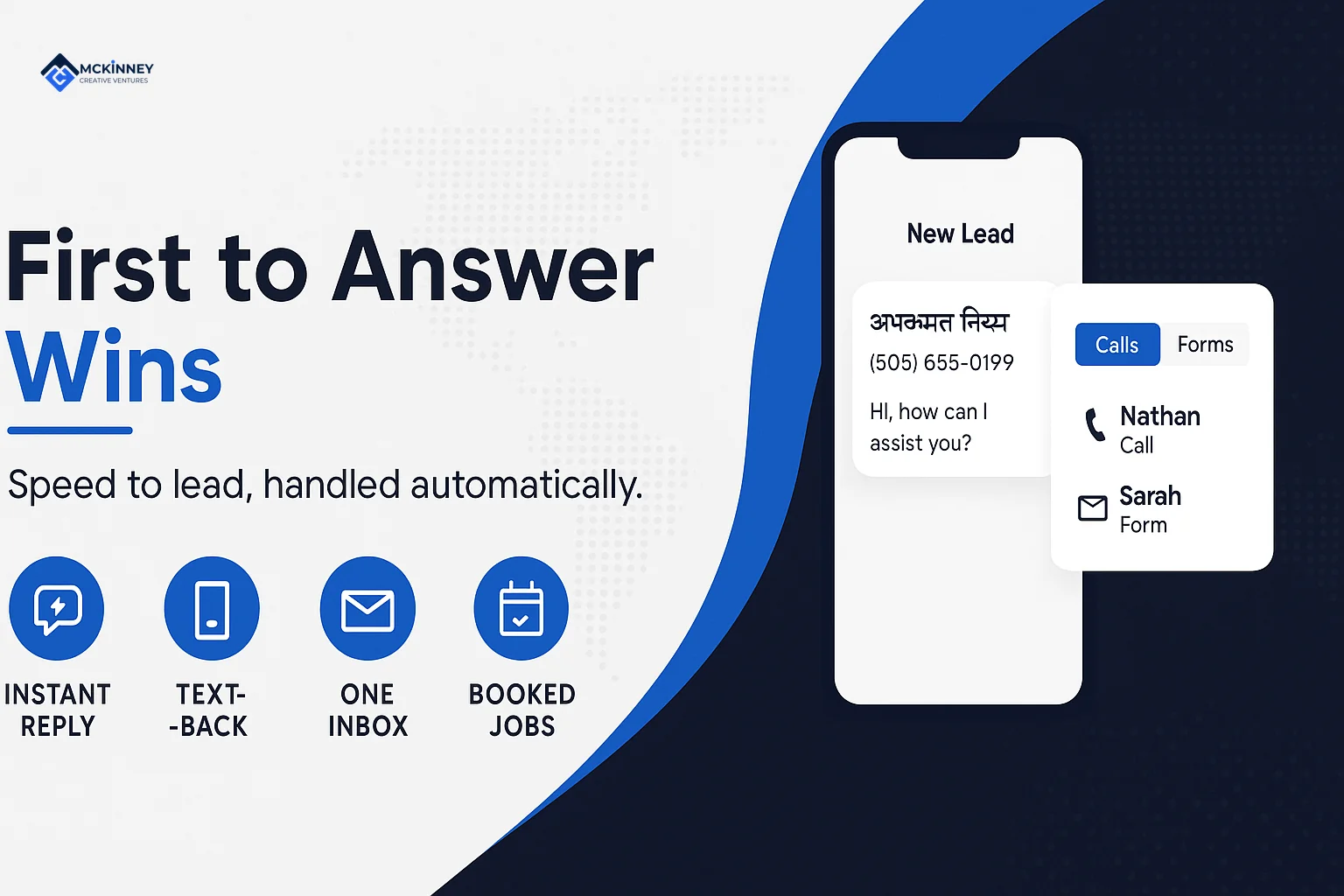
First to Answer Wins
We will not point ad budget at a business that cannot answer fast. This is the three and a half minute version of why.
Episode 2 · 3:34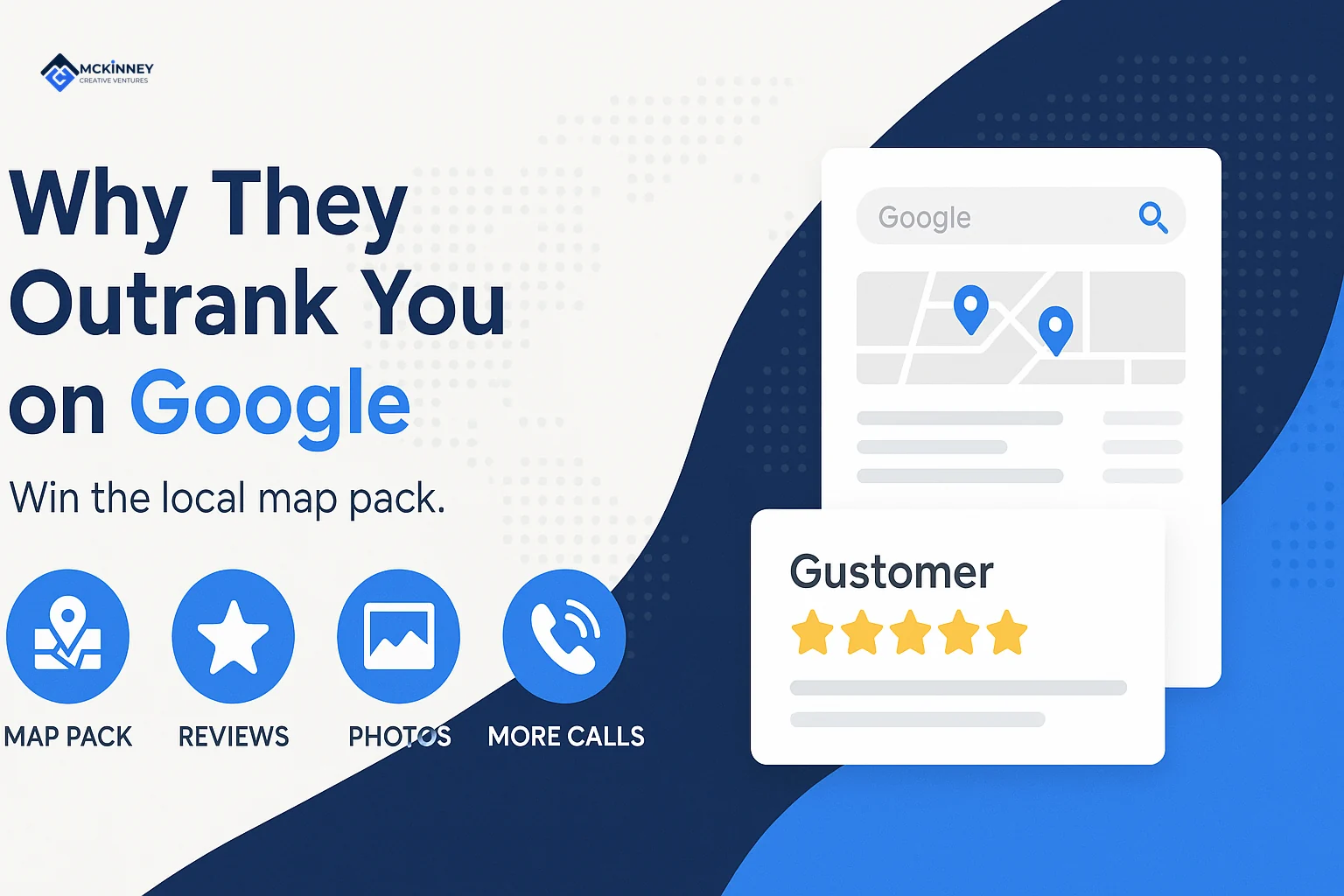
Why Your Competitor Shows Up First on Google
Your ad shares a screen with the map pack. This covers what decides the placements you are not paying for, so you know what you are actually buying.
Episode 3 · 4:32More on Digital Advertising
We write up what we learn doing this work. These articles go deeper than a service page can.
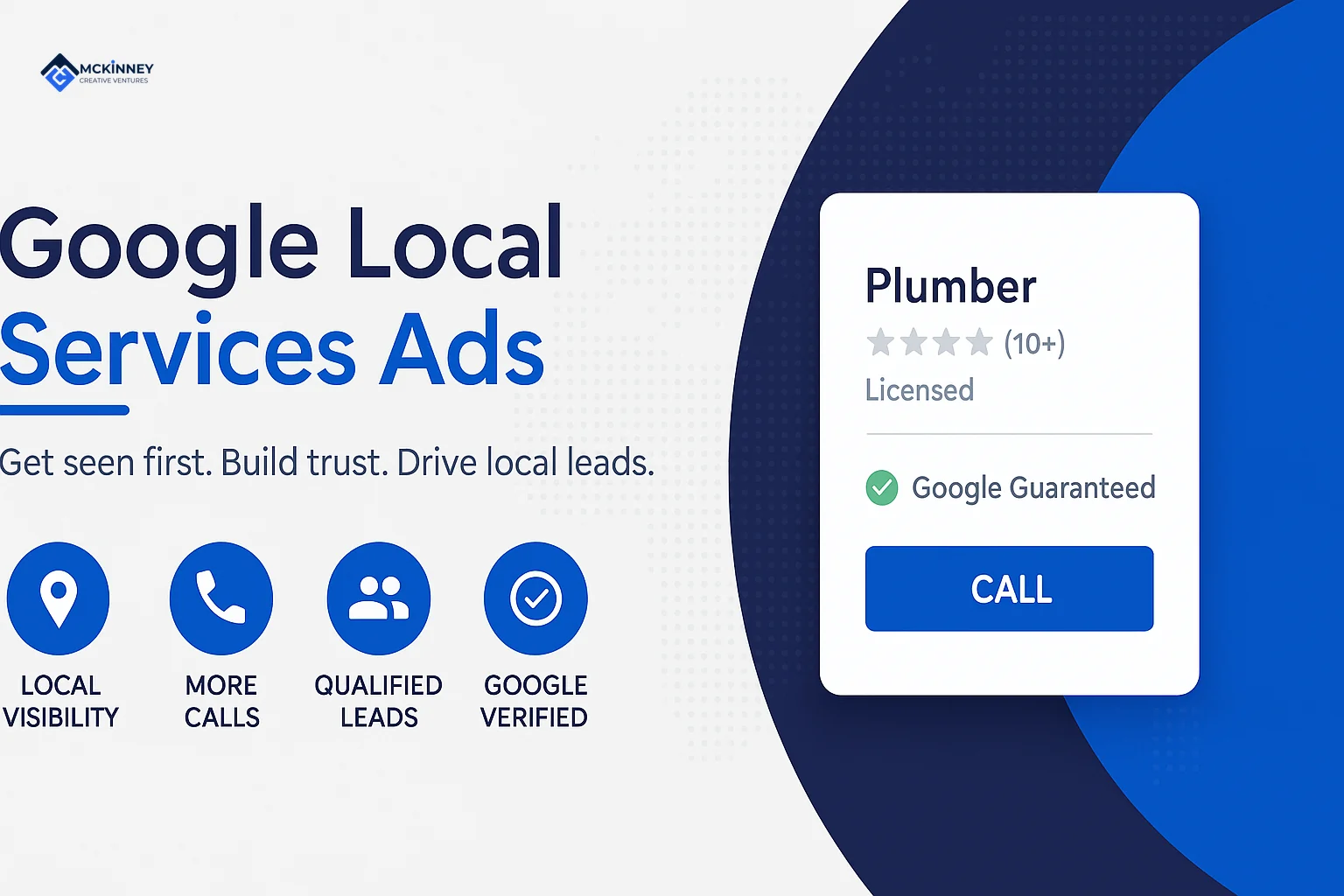
The Complete Google Local Services Ads Setup Guide for Home Service Businesses
The full walkthrough of verification, budgets, job types, and lead disputes. If you want to see exactly what step three of our process involves, this is it.
Read the article
How Much Should a Local Service Business Actually Spend on Marketing in 2026
Read this before you pick a number. It covers how to work backward from job value and close rate instead of guessing at a monthly figure.
Read the article
Speed to Lead: Why the First Five Minutes Decide the Job
The reason we will not point ads at a business that cannot answer the phone. This is what happens to the leads you paid for while they wait.
Read the article
HVAC Marketing in Minnesota: How to Fill the Schedule Year-Round
A full example of paid, CRM, and database reactivation working as one system through peak and shoulder seasons. The pattern applies well beyond HVAC.
Read the article
Why Most Local Marketing Agencies Fail Their Clients (And How to Pick One That Will Not)
Worth reading before you hand anyone your ad budget, including us. It covers the reporting games and account ownership traps to watch for.
Read the article